


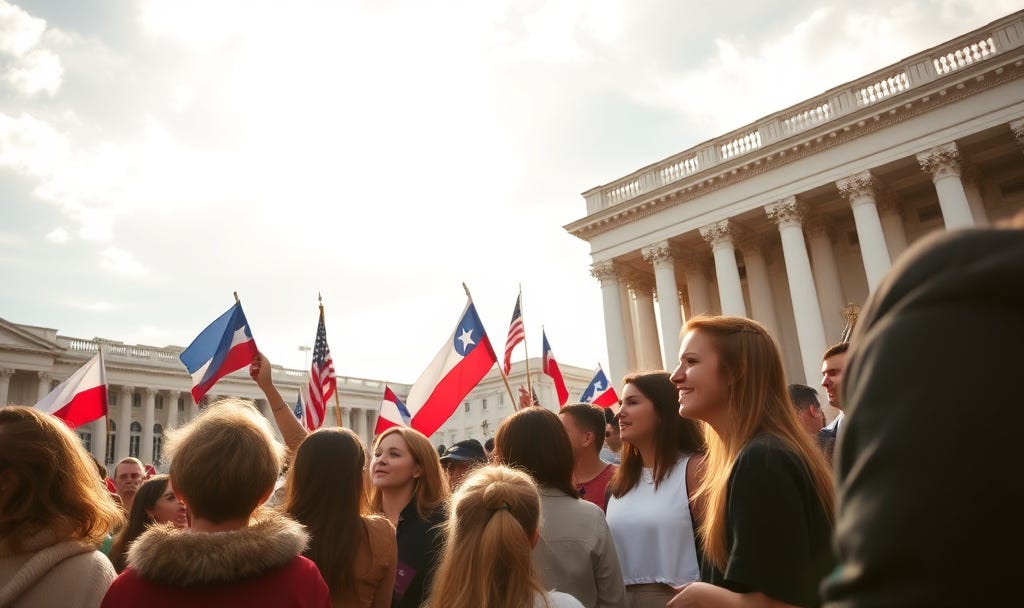
In an era often dominated by headlines of political division and democratic fatigue, there’s a refreshing undercurrent that’s easy to overlook: the surge in youth involvement in politics. As we navigate 2026, data from recent surveys and reports paints a picture of young people not just showing up at the polls, but actively shaping the civic landscape. From higher voter turnout among Gen Z to a willingness to run for office, this trend isn’t just a blip—it’s a beacon of hope.
Here’s why the increasing engagement of youth in politics is a reason to be optimistic about democracy’s resilience and future innovation.
A Generation Stepping Up: The Evidence of Rising Engagement
Youth political participation is on an upward trajectory, backed by compelling statistics. In the 2024 U.S. presidential election, voter turnout among 18-29-year-olds reached notable levels, with rural youth at 42% and urban/suburban peers higher, according to Tufts University’s CIRCLE.
Beyond voting, millions of young people are diving into advocacy—protesting, signing petitions, and organizing on issues like climate change, LGBTQ+ rights, and democracy itself. Young women, in particular, lead the charge, being 7% more likely to protest and 9% more likely to sign petitions than their male counterparts.
Globally, the World Economic Forum’s Youth Pulse 2026 report reveals that over one-third of young respondents (36%) say they’re likely to run for political office, signaling a shift from apathy to ambition.
In the U.S., Gen Z’s political clout is expected to grow, with priorities like climate action, reproductive rights, and student debt driving their involvement.
This isn’t confined to elections; civic education programs are accelerating engagement, as noted in reports from the International Foundation for Electoral Systems (IFES), where informal activities often blend seamlessly with formal political roles.
On platforms like X (formerly Twitter), discussions echo this momentum. Posts highlight youth-led movements, from climate activists inspiring global hope to board members of young democratic associations pushing for civic awareness.
These trends counter narratives of disinterest, showing young people as dynamic forces ready to bridge gaps in representation.
Reason 1: Fresh Perspectives on Pressing Issues
One of the most compelling reasons for optimism is how youth bring innovative ideas to longstanding challenges. Unlike older generations, young people prioritize long-term issues like climate change and economic inequality, which they will inherit. The WEF report notes a balanced view among youth: while 51% see risks like authoritarianism, 49% spotlight opportunities in innovative governance and expanded civic engagement.
In the U.S., Harvard’s Youth Poll shows young Americans valuing diversity, inclusion, and democracy—priorities that could foster more equitable policies.
This focus translates to action. For instance, youth who rank climate or LGBTQ+ issues highly are up to 16% more likely to protest, injecting urgency into movements that might otherwise stagnate.
By engaging now, they’re not just reacting—they’re proactively redesigning systems for sustainability and justice.
Reason 2: Building Inclusive and Diverse Leadership
Youth engagement promises a more representative democracy. Globally, only 2.8% of parliamentarians are under 30, despite half the world’s population being that age—a gap that youth are eager to close.
The OECD emphasizes that age-diverse governments foster inclusive policies, bridge intergenerational divides, and boost trust.
In America, the Institute for Citizens & Scholars finds young adults less ideologically polarized, proud to be American, and rejecting political violence—traits that could temper extremism.
X posts celebrate figures like Mbali Ntuli, who notes youth’s independence from party loyalty, inspiring fresh leadership in places like South Africa.
This diversity isn’t just demographic; it’s ideological, paving the way for collaborative governance.
Reason 3: Leveraging Technology for Broader Mobilization
Digital natives are revolutionizing how politics happens. Gen Z activism is heavily online—66% engage through social media fundraising and awareness—amplifying voices that traditional systems might silence.
In Michigan, young voter turnout rose 4% from 2022 to 2024, fueled by platforms like TikTok and Instagram, where news consumption among youth has spiked.
This tech-savvy approach democratizes participation. Initiatives like Nepal’s Shaping Political Futures turn protests into policy dialogues, showing how youth-led platforms can build resilience.
Optimism stems from this scalability: what starts as a viral post can evolve into real-world change, engaging millions who felt disconnected before.
Reason 4: Countering Democratic Backsliding
In a time of global democratic declines, youth engagement acts as a bulwark. IFES reports that motivated young cohorts can promote social cohesion and inclusion, tipping scales toward democracy.
Civic education accelerates this, with alumni surveys showing participants launching community projects post-training.
Tufts data reinforces youth’s belief in collective power: 76% think their generation can change things, and 83% see potential in intergenerational collaboration.
Even amid pessimism, NPR’s survey finds young Americans optimistic about personal success, viewing politics as a tool for broader progress.
This proactive stance could reverse trends like authoritarianism, especially as youth in places like Kenya and Poland organize for transparency and empowerment.
Reason 5: Long-Term Civic Habits and Community Impact
Early involvement breeds lifelong commitment. NAACP studies show community participation boosts voting likelihood, creating a virtuous cycle.
Over 30 years, U.S. trends indicate college-aspiring youth are more civically engaged, with differences tied to education but potential for growth across groups.
UNESCO’s 2026 Youth Report highlights youth’s role in education decision-making, extending to politics for systemic change.
In the U.S., 51% of Gen Z have joined rallies, with college students at 56%, fostering mental health and community ties.
This builds resilient societies, where engaged youth address local issues that ripple nationally.
A Hopeful Horizon
The increasing youth engagement in politics isn’t just about numbers—it’s about reinvigorating democracy with energy, innovation, and inclusivity. As reports from Tufts, Harvard, and the WEF illustrate, young people are optimistic agents of change, ready to lead despite challenges.
For policymakers, the message is clear: listen, support, and make space. For the rest of us, it’s a call to celebrate this wave—because when youth rise, so does our collective future.