


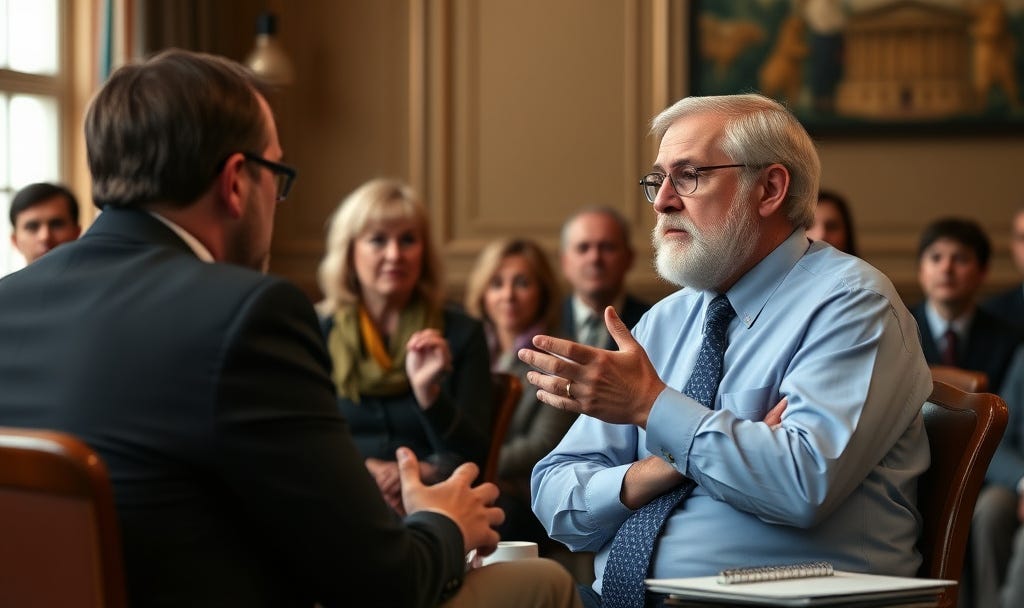
In an era where political conversations often devolve into shouting matches and echo chambers, it’s time to reclaim the high ground. As a SuperPAC dedicated to uniting Americans through positive, constructive engagement, we believe that improving political discourse isn’t just possible—it’s essential for a thriving democracy.
By focusing on empathy, respect, and shared goals, we can reduce toxicity and build a more collaborative future.
Here are key ways to make that happen.
1. Prioritize Empathy and Active Listening
At the heart of less toxic discourse is the simple act of seeing others as fellow citizens rather than adversaries. Imagine debates where participants start by acknowledging the other’s perspective: “I understand your concern about economic inequality—let’s explore solutions together.” This approach, rooted in empathy, diffuses tension and opens doors to compromise. Organizations have shown success with workshops that pair liberals and conservatives for honest, respectful dialogues, proving that listening can bridge even the widest divides.
2. Emphasize Facts and Evidence-Based Arguments
Toxicity thrives on misinformation and emotional outbursts. Shifting toward fact-driven discussions can change that. Encourage the use of reliable sources and critical thinking—tools like fact-checking sites or nonpartisan think tanks can help verify claims before they’re shared. In town halls or online forums, rewarding evidence over rhetoric fosters accountability. When politicians and pundits model this behavior, it sets a tone where ideas win on merit, not volume, leading to more productive policy debates.
3. Harness Technology for Positive Engagement
Social media platforms, often blamed for amplifying division, can instead promote unity. Features like community guidelines that reward civil comments or algorithms prioritizing constructive content could transform online spaces. SuperPACs and advocacy groups can lead by example, running campaigns that highlight positive stories of bipartisan cooperation. Think of initiatives like #CivilityChallenge, where users pledge to respond thoughtfully, turning viral outrage into viral understanding.
4. Invest in Education and Civic Training
Long-term improvement starts with the next generation. Integrating media literacy and debate skills into school curricula equips young Americans to navigate politics without resorting to personal attacks. Adult programs, such as community seminars on conflict resolution, can extend this to all ages. By viewing disagreement as an opportunity for growth rather than conflict, we cultivate a culture where diverse viewpoints strengthen society.
In the end, less toxic political discourse isn’t about silencing voices—it’s about elevating the best of them.
As we champion these principles, we invite all Americans to join us in this effort. Together, we can restore faith in our democratic process, one respectful conversation at a time. Let’s choose unity over division and build an America where ideas flourish freely.